


Something quiet is taking place in the office, the shop, the clinic, and the factory. Teams are simultaneously abandoning broad, one-size-fits-all digital tools. They no longer want to force their work into rigid or generic systems. They want tools built for their world. Which is where vertical software steps in: focused, practical, and shaped to the daily flow of a single industry. And today, it’s changing the way work gets done.
What is Vertical Software?
Vertical software is a solution built for one industry. In contrast, horizontal software is built to serve multiple industries simultaneously. So, whereas anyone might use a horizontal tool to manage email or sales leads, a vertical tool is designed for one specific job role, business model, or workflow.
Why Vertical Software is Growing Fast?
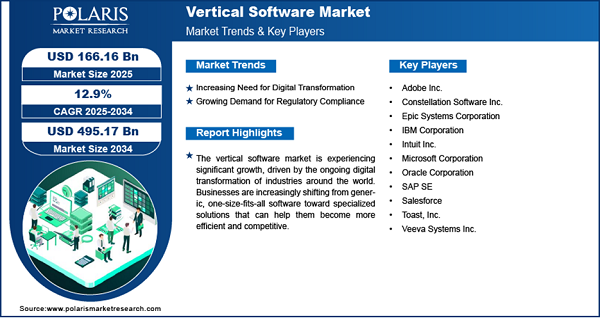
The global vertical software market was valued at USD 147.50 billion in 2024 and is expected to register a CAGR of 12.9% from 2025 to 2034. According to Polaris Market Research, the major factors driving it are:
- Businesses want tools that cater specifically to their needs and workflows. Vertical software addresses this by offering features tailored to fields such as healthcare, finance, and retail.
- As companies move deeper into digital operations, the need for software to handle complex tasks, manage data, and deliver better customer experiences is critical. The push toward digital change is a major driver.
- The cloud-based models make these industry-focused tools more accessible, easier to scale, and more affordable for businesses of every size.
Why Vertical Software Fits So Well?
Know User
Vertical software speaks the language of its users. The doctor wants to see patient charts, test results, and billing codes. The farmer wants weather data, soil tracking, and crop planning. A hotel wants to book rooms and process guest check-ins. Because the vertical tools reflect these needs, users feel at home. Learning is easy. Adoption is swift.
Cuts out Extra Work
General tools usually require add-ons or heavy customization. This takes money and time. Vertical tools already know what the work requires. They remove steps. They join data. They offer in-built workflows. This reduces mistakes and saves hours every week.
Handles Industry Rules
Every industry has rules. Think medical privacy laws, school safety rules, or real estate contract rules. Vertical software includes these rules from the outset. It helps teams stay compliant without having to read long manuals or hire consultants.
Examples of Vertical Software in Real World
Healthcare
Healthcare tools manage appointments, lab results, and insurance claims. They support the doctor with patient histories. They guide the nurse with treatment plans. They help staff track supplies and rooms. These tools bring structure to a world that is often fast and busy.
Education
Schools use a student information system. In one place, teachers track grades, attendance, and lesson plans. Parents receive clear updates. Students view their tasks. This helps establish a smooth flow both at home and at school.
Construction
Construction teams manage project bids, site plans, and safety checks, and schedule workers using these tools. Changes can be shared in real-time. This will help keep the projects on track and minimize delays.
Retail
It will help the store manage its stock and keep sales records, while also helping in understanding customer trends. It also helps online shops in handling payments, returns, and product listings.
How Vertical Software Helps Teams Work Better?
Better Data and Insight
When software understands the work, it gathers useful data. This enables teams to observe patterns and identify problems to plan. A veterinary clinic might notice that visits increase in which seasons. The farmer might notice which fields bring better crops.
Smoother Daily Work
Vertical tools reduce manual work. Less typing. Less switching between systems. Less confusion. This leads to smoother days and calmer teams.
Better Quality Results
When work is flowing well, better results follow. Patients receive more effective care. Students understand things better. Stores serve customers more quickly. Builders complete projects more safely and sooner. Quality improves across the board.
Future of Vertical Software
Vertical software is growing stronger as AI enters the picture. AI can read charts, track safety risks, or study stock trends; automation can be done that previously took hours to execute; it can even suggest recommendations based on past data. More industries will have advanced tools made for them. Many small businesses will join vertical platforms. These tools will get smarter, simpler, and more connected.
In Conclusion
Vertical software is on the rise rapidly because it meets real industry needs, reduces unnecessary work, and keeps teams compliant without effort. As digital adoption grows and AI improves these tools, they will continue to shape how businesses work, grow, and serve their customers.