


Disaster Response Market – According to Research Intelo, the Global UAV-Based 5G Node for Disaster Response market size was valued at $1.2 billion in 2024 and is projected to reach $6.8 billion by 2033, expanding at a CAGR of 21.3% during the forecast period of 2025–2033. The primary factor fueling this robust growth is the increasing frequency and severity of natural and man-made disasters, which has underscored the critical need for rapid, resilient, and reliable communication infrastructure. UAV-based 5G nodes offer a transformative solution by swiftly restoring connectivity, enabling real-time data transmission, and supporting coordinated multi-agency responses in disaster-affected zones. As governments and humanitarian organizations worldwide prioritize disaster preparedness and response, the integration of advanced UAV-based 5G technologies is set to revolutionize emergency communications and operational efficiency in crisis scenarios.
Disaster response often requires fast, reliable communication infrastructure to coordinate rescue operations, assess damage, and provide emergency connectivity to impacted regions. Traditional ground-based communication systems frequently fail during natural calamities, such as earthquakes, floods, hurricanes, and wildfires. In such scenarios, unmanned aerial vehicles (UAVs) equipped with 5G communication nodes are emerging as a transformative solution. The UAV-based 5G node for disaster response market is gaining traction as governments, emergency services, and technology vendors recognize the strategic importance of mobile, high-speed communication support in post-disaster environments.
Key Market Drivers
Growing Frequency and Severity of Disaster Events
Global climate change has intensified the frequency of extreme weather events. Earthquakes, floods, landslides, and storms often disrupt cellular networks by damaging towers, cables, and power grids. UAV-based 5G nodes provide a highly effective alternative that can be launched within minutes to restore communication for public rescue teams, medical operators, and affected populations.
Advancements in UAV and Miniaturized 5G Hardware
Progress in drone flight endurance, payload capacity, and autonomous navigation is strengthening the feasibility of aerial communication platforms. Simultaneously, telecom hardware is becoming smaller, more energy-efficient, and easier to integrate. This synergy drives market scalability.
Increasing Government and Defense Investments
National disaster response agencies, border security forces, and defense organizations are investing in UAV-based emergency communication platforms. These systems enable real-time surveillance, search and rescue coordination, and secure encrypted communication making them valuable for both humanitarian operations and strategic missions.
Public Connectivity and Humanitarian Relief Demand
In disaster-affected regions, civilians often lose the ability to contact families, emergency teams, or relief authorities. UAV-based 5G nodes can establish temporary Wi-Fi hotspots or cellular coverage, enabling information exchange and crisis management.
Technological Landscape
Fixed-Wing vs. Multirotor UAV Platforms
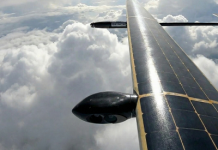
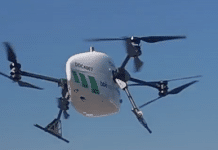
Fixed-wing UAVs offer longer flight times and broader coverage, making them suitable for wide-area communication relays. Multirotor drones are more maneuverable, easier to launch, and better for urban or confined zones. Hybrid drone platforms are also emerging to combine endurance and agility.
Integration with Edge Computing
Embedding edge processors on UAVs improves local data analytics, reducing backhaul dependency and latency. This is particularly useful in time-sensitive tasks such as locating survivors using thermal imaging or AI-based image recognition.
Backhaul Connectivity via Satellite and Ground Relays
To ensure stable communication, UAV-based 5G nodes often link to external communication networks through satellites, microwave relays, or mobile ground stations. This hybrid setup enhances reliability in remote and offshore disaster scenarios.
Market Challenges
Limited Flight Endurance
Current lithium battery technologies restrict UAV operation time, often requiring frequent rotation or tethering systems. Research is intensifying in hydrogen fuel cells, solar wings, and hybrid propulsion systems to address endurance limitations.
Regulatory and Airspace Restrictions
Deploying UAVs in disaster zones requires airspace clearance and regulatory permissions. The need for coordinated UAV traffic management is increasing as multiple organizations may operate drones simultaneously.
High Initial Cost
The integration of high-performance UAVs with 5G nodes, encryption systems, sensors, and power management components leads to significant capital expenditure. However, costs are expected to decline with increased adoption and production scale.
Future Outlook
The future of UAV-based 5G nodes in disaster response is promising, driven by innovations in swarm-based UAV networks, automated navigation, and AI-led command platforms. Swarm UAV systems could enable large-area connectivity restoration through mesh networking, improving scalability and resilience. Further integration with satellite-based communication constellations will also help establish global emergency network frameworks.
Competitive Landscape
Leading Companies in the UAV-Based 5G Node for Disaster Response Market:
- Ericsson
- Huawei Technologies
- Nokia Corporation
- Qualcomm Technologies
- DJI Innovations
- Lockheed Martin
- AeroVironment
- Parrot Drones
- AT&T
- Verizon Communications
- ZTE Corporation
- Thales Group
Source: https://researchintelo.com/report/uav-based-5g-node-for-disaster-response-market