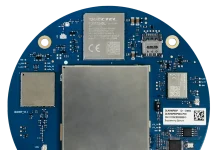



GNSS Positioning Chips Market:
According to Growth Market Reports, the GNSS (Global Navigation Satellite System) Positioning Chips market size reached USD 6.72 billion in 2024, exhibiting robust momentum driven by rapid advancements in location-based services and the proliferation of connected devices. The market is projected to grow at a CAGR of 9.3% from 2025 to 2033, reaching an estimated value of USD 14.87 billion by 2033. This impressive trajectory is attributed to the expanding integration of GNSS chips in automotive, consumer electronics, and industrial applications, as well as the increasing demand for high-precision navigation solutions across diverse end-user segments.
The GNSS (Global Navigation Satellite System) Positioning Chips Market has become a crucial component of modern digital infrastructure, enabling accurate positioning, navigation, and timing services across numerous industries. GNSS positioning chips are semiconductor devices embedded in electronic systems that receive signals from satellite constellations such as GPS, GLONASS, Galileo, and BeiDou to determine geographic location and movement. These chips are widely integrated into smartphones, vehicles, wearables, drones, and industrial equipment.
Key Market Drivers
Rising Demand for Location-Based Services
Location-based services have become integral to everyday life. Mobile applications rely heavily on GNSS chips for navigation, ride-sharing, food delivery, and fitness tracking. With billions of smartphones in use worldwide, demand for efficient GNSS chipsets continues to increase.
Additionally, businesses use location data to improve operational efficiency, monitor supply chains, and optimize logistics networks. These factors collectively contribute to the growing adoption of GNSS chips.
Growth of Autonomous Vehicles and ADAS
The automotive sector is one of the fastest-growing application areas for GNSS positioning chips. Modern vehicles increasingly rely on advanced driver assistance systems (ADAS), which require accurate positioning information for navigation, lane guidance, and collision avoidance.
The automotive segment alone was valued at approximately USD 1.55 billion in 2024, reflecting the rising integration of satellite navigation technology in vehicles.
As autonomous driving technologies continue to develop, high-precision GNSS chips capable of centimeter-level accuracy will become essential for safe vehicle operation.
Expansion of Smart Cities
Governments worldwide are investing heavily in smart city initiatives that rely on location data for traffic management, infrastructure monitoring, and public safety systems. Smart transportation networks, connected public services, and urban planning tools all depend on accurate positioning technologies.
The increasing adoption of digital infrastructure in urban environments is therefore expected to accelerate demand for GNSS chips.
Advancements in Precision Agriculture
Precision agriculture has emerged as another major growth area for GNSS positioning chips. Farmers use GNSS-enabled machinery to perform automated planting, irrigation, and harvesting with high levels of accuracy.
These systems help optimize crop yields, reduce waste, and improve resource efficiency. GNSS chips enable tractors and agricultural equipment to follow precise paths across farmland, ensuring consistent crop management practices.
Challenges in the GNSS Positioning Chips Market
Despite its growth potential, the GNSS chip market faces several challenges.
One major challenge is signal interference and obstruction, particularly in urban environments where buildings can block satellite signals. This issue requires advanced algorithms and hybrid positioning systems to maintain accurate location tracking.
Another challenge is cybersecurity and signal spoofing, which can disrupt navigation systems and pose risks to critical infrastructure.
Additionally, the high cost of high-precision GNSS chips may limit adoption in cost-sensitive applications.
Future Outlook
The future of the GNSS positioning chips market looks highly promising as location-based technologies continue to expand. Emerging applications such as autonomous drones, smart mobility solutions, and connected infrastructure will create new opportunities for chip manufacturers.
Advances in satellite navigation systems, AI-based signal processing, and hybrid positioning technologies will further enhance GNSS capabilities. As industries increasingly rely on precise location data, GNSS positioning chips will remain a critical component of modern digital ecosystems.
In the coming years, the market is expected to experience strong growth driven by innovation, increasing connectivity, and the expanding role of geospatial intelligence in everyday life.
Competitive Landscape
Prominent companies operating in the market are:
- Qualcomm
- Broadcom
- u-blox
- STMicroelectronics
- MediaTek
- Sony Semiconductor Solutions
- SkyTraq Technology
- Quectel
- Septentrio
- Trimble
- Hexagon (NovAtel)
- Furuno Electric
- Allystar Technology
- Nordic Semiconductor
- Intel