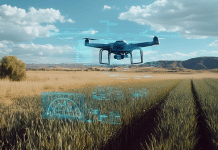



Edge artificial intelligence (AI) isn’t just our future; it’s our present. This technology processes data directly on electronic devices instead of in the cloud, keeping our world moving.
“Cloud-based AI has several limitations,” said Patrick Zeng, general manager of building automation at TI. “If you use a central processor to implement a simple function such as proximity or keyword detection, the system’s latency and power consumption becomes less efficient. In cases like this, edge AI has a huge advantage.”
With edge AI capabilities across TI’s entire embedded portfolio, there’s no limit to what engineers can accomplish. To better understand the real-world impact and benefits of edge AI, we talked with our AI experts about how these innovations are reshaping the capabilities and potential of electronic devices in the medical, renewable energy and building automation industries.
Making health care more affordable and accessible
Edge AI technology is helping to expand health care from a centralized model solely focused on hospitals and specialized clinics to a decentralized one that is faster, more accessible, and patient-centered.
“Everyday devices are beginning to deliver insights we once only expected from a doctor’s visit,” said John Varela Munoz, general manager of systems and engineering marketing at TI.
One example is a wearable heart monitor. Edge AI enables the device to analyze heart rhythms locally, filter out noise, and flag irregularities in real time. The device can use locally run AI models, learn an individual’s unique baseline, and tailor alerts, giving them reliable access to high-quality monitoring.
Today, we’re using AI to improve the accuracy of one to two sensor inputs. But in five to ten years, AI models will be able to include data from multiple sensor inputs, such as temperature, pressure and electrical data that can provide a better understanding of the patient.
“In the future, AI has the potential to optimize the personal experience and accelerate the process where it can learn what’s unique to a person and modify the way it does algorithms,” John said.
For example, a patient might receive a diagnosis based on 90% of people with similar symptoms having the same illness. But if they’re that 10%, AI can take more input from the patient about their health history and patterns, helping to account for nuances that could inform a diagnosis.
Enabling adoption of and innovation for sustainable energy
As sustainable energy becomes more widespread in powering everyday applications, edge AI can enable further adoption. Renewable energy will be the largest global energy source by 2030, and TI is working on edge AI-enabling solutions that can help support systems and increase reliability.
In solar panels, TI pre-trains models that use edge AI to detect arcs with almost 20% more accuracy. Edge AI-enabled arc fault detection can improve system reliability and decrease the number of false triggers that can shut a system down, preventing end-users from making costly and time-consuming calls to technicians to identify whether a trigger is an arc fault.
Solar inverters and energy storage (ESS) power conversion systems use complex power conversion topologies such as single-stage converters, where high efficiency over large input and output ranges is challenging to implement. A neural network running on an edge AI-accelerated MCU can accelerate implementation and help to maintain the converter by soft switching (or turning off circuits when no current is flowing), reducing power losses and increasing efficiency and reliability in end-users’ systems.
Edge AI can also help accelerate electrochemical impedance spectroscopy (EIS) algorithms for ESS, providing more accurate states of charge and health to extend battery life. EIS also enables better thermal runway prediction to help make systems safer.
“TI was one of the first semiconductor companies that brought out microcontrollers with AI accelerators. Those AI accelerators help customers implement AI in applications where it was previously impossible,” said Henrik Mannesson, general manager of grid infrastructure at TI. The integrated neural processing unit (NPU) in these microcontrollers can also help systems achieve greater than 99% fault-detection accuracy.
“We’ll continue developing those use cases that make sense in energy infrastructure,” Henrik said. “But we also recognize the need to build universal tools that enable customers to further innovate with edge AI, for use cases we may not have thought of.”
Bringing comfort, safety and security to buildings – while saving energy
A common challenge in building automation is finding the right balance between performance, privacy and power consumption to make decisions about occupants’ well-being and maximizing energy efficiency. “Edge AI gives engineers the tools to achieve that balance directly on the device,” Patrick said.
Take motion detectors as an example. With older passive infrared sensors, a gust of air from an HVAC vent or a pet crossing the room could trigger a false alert, wasting energy or frustrating occupants. Integrating edge AI into an infrared sensor enables motion detectors to distinguish between people, background noise or movement, leading to more accurate lighting, security and comfort systems.
The same idea applies to other use cases. With audio event detection, a high-performance embedded processor with edge AI capabilities can manage voice recognition on devices such as security cameras or glass-break detectors, while enabling low power consumption and accuracy. Edge AI can also help make HVAC systems learn occupancy patterns and identify environmental factors such as temperature and humidity to make automatic adjustments for comfort and energy savings.
The variety of use cases all have one benefit in common: predictive capabilities. “Engineers adopting AI must ask themselves: What predictive issues and problems should my device address?” Patrick said.
The possibilities are endless. Medical, building automation and renewable energy are only the beginning.
“As we continue collaborating with designers, we lay the foundation for them to easily adopt edge AI or enable the next edge AI-enabled breakthrough. With devices that are already more convenient, accessible and efficient due to edge AI now, what and where is next?” John said.
Source: TI blog