

Introduction
In the realm of industrial automation, electronics, and various measurement applications, sensors play a crucial role in detecting and measuring different physical quantities. Voltage sensors and capacitive sensors are two types of sensors that are widely used but serve distinct purposes and operate based on different principles. Understanding their differences, advantages, disadvantages, and suitable applications is essential for engineers and technicians to make informed decisions when selecting the right sensor for a specific task.
Basic Principles of Operation
Voltage Sensors
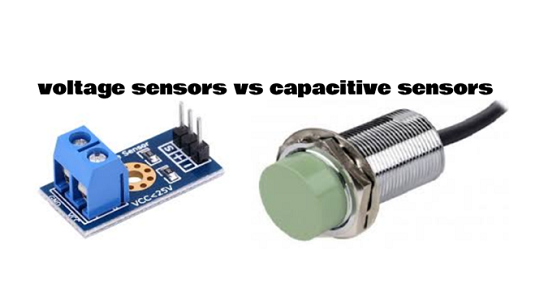
Voltage sensors are designed to measure the electrical potential difference between two points in a circuit. They typically work by converting the voltage signal into a proportional output that can be easily measured and processed. There are several types of voltage sensors, including resistive voltage dividers, Hall effect sensors (for measuring voltage indirectly through magnetic fields), and differential amplifiers.
- Resistive Voltage Dividers: These are simple and commonly used for low-voltage measurements. They work by dividing the voltage across two resistors in series, allowing a smaller portion of the voltage to be measured safely.
- Hall Effect Sensors: These sensors measure the voltage generated across a conductor when a magnetic field is applied perpendicular to the current flow. They are useful for measuring the voltage indirectly in high-voltage applications where direct contact is not feasible.
- Differential Amplifiers: These are used to measure the difference in voltage between two points. They are highly accurate and can amplify small voltage differences, making them suitable for precision measurements.
Capacitive Sensors
Capacitive sensors operate based on the principles of capacitance, which is the ability of a system to store an electric charge. They consist of two conductive plates separated by a dielectric material (insulator). When an object approaches the sensor, it changes the capacitance of the system, which can be detected and measured.
- Proximity Sensing: Capacitive sensors are often used to detect the presence or absence of objects without physical contact. The change in capacitance due to the proximity of an object is converted into an electrical signal.
- Level Sensing: They can also be used to measure the level of liquids or powders in a container. The dielectric constant of the material affects the capacitance, allowing the sensor to determine the level based on the change in capacitance.
- Position Sensing: Capacitive sensors can measure the position or displacement of objects with high precision. This is useful in applications such as touchscreens, where the position of a finger or stylus is detected.
Advantages and Disadvantages
Voltage Sensors
- Advantages:
- High Accuracy: Voltage sensors can provide highly accurate measurements, especially when using differential amplifiers.
- Wide Range: They can measure a wide range of voltages, from very low to very high levels, depending on the design.
- Non-Intrusive: Some types of voltage sensors, like Hall effect sensors, can measure voltage without direct contact, reducing the risk of electrical shock and interference.
- Simple Design: Resistive voltage dividers are simple and cost-effective to implement.
- Disadvantages:
- Load Effect: Voltage dividers can introduce a load effect, altering the circuit’s behavior.
- Limited to Electrical Measurements: They are specifically designed for measuring voltage and cannot detect other physical properties.
- Sensitivity to Noise: High-voltage measurements can be susceptible to electromagnetic interference, requiring shielding and filtering.
Capacitive Sensors
- Advantages:
- Non-Contact Measurement: Capacitive sensors can detect objects without physical contact, reducing wear and tear and the risk of contamination.
- High Precision: They can provide high-resolution measurements, making them suitable for precise applications like touchscreens.
- Versatility: Capacitive sensors can measure various physical quantities, including proximity, level, and position.
- Immunity to Magnetic Fields: Unlike inductive sensors, capacitive sensors are not affected by magnetic fields, making them suitable for certain industrial environments.
- Disadvantages:
- Sensitivity to Environmental Factors: Capacitive sensors can be affected by changes in temperature, humidity, and the presence of conductive materials, which can lead to false readings.
- Limited Range: The sensing range is generally shorter compared to other types of sensors like ultrasonic or radar sensors.
- Complex Calibration: Proper calibration is required to account for the dielectric properties of the materials being measured, which can be complex and time-consuming.
Applications
Voltage Sensors
Voltage sensors are used in a wide range of applications where accurate voltage measurement is critical. Some common applications include:
- Power Monitoring: In electrical grids and power distribution systems, voltage sensors are used to monitor the voltage levels to ensure stable power supply.
- Battery Management: In electric vehicles and battery-powered devices, voltage sensors are essential for monitoring the battery’s state of charge and ensuring safe operation.
- Industrial Control Systems: They are used to measure and control the voltage in various industrial processes, such as motor drives and power supplies.
- Laboratory Equipment: Voltage sensors are used in oscilloscopes, multimeters, and other test equipment for precise voltage measurements.
Capacitive Sensors
Capacitive sensors are employed in numerous applications due to their non-contact and high-precision capabilities. Some typical applications include:
- Touchscreens: Capacitive touchscreens are widely used in smartphones, tablets, and other electronic devices to detect finger movements and gestures.
- Level Measurement: In chemical plants and food processing industries, capacitive sensors are used to measure the level of liquids and powders in tanks and containers.
- Position Sensing: They are used in precision machinery and robotics to measure the position and displacement of components.
- Proximity Detection: Capacitive sensors are used in automated doors, security systems, and industrial automation to detect the presence of objects.
Comparison of Key Parameters
Sensing Range
- Voltage Sensors: The sensing range can vary widely, from millivolts to kilovolts, depending on the specific type and application.
- Capacitive Sensors: The typical sensing range is relatively short, usually a few millimeters to a few centimeters, although some specialized sensors can extend this range.
Accuracy
- Voltage Sensors: High accuracy is achievable, especially with differential amplifiers and precision voltage dividers, often in the range of ±0.1% or better.
- Capacitive Sensors: Accuracy can be high for position and level sensing, typically in the range of ±0.5% to ±1%, but can be affected by environmental factors.
Environmental Sensitivity
- Voltage Sensors: Generally less sensitive to environmental factors like temperature and humidity, although high-voltage sensors may require shielding from electromagnetic interference.
- Capacitive Sensors: Highly sensitive to changes in temperature, humidity, and the presence of conductive materials, which can affect the dielectric constant and lead to inaccurate readings.
Cost
- Voltage Sensors: The cost can vary significantly depending on the type and precision required. Simple resistive voltage dividers are inexpensive, while high-precision differential amplifiers and Hall effect sensors can be more costly.
- Capacitive Sensors: The cost is generally moderate to high, especially for high-precision and specialized applications. The complexity of calibration and environmental compensation can also add to the overall cost.
Installation and Maintenance
- Voltage Sensors: Installation is relatively straightforward, especially for voltage dividers. Maintenance is minimal, but periodic calibration and inspection are required for high-precision sensors.
- Capacitive Sensors: Installation can be more complex, requiring proper alignment and calibration. Maintenance may involve cleaning and recalibration to account for environmental changes.
Conclusion
Both voltage sensors and capacitive sensors have their unique advantages and disadvantages, making them suitable for different applications. Voltage sensors are ideal for precise electrical measurements in a wide range of applications, from power monitoring to laboratory equipment. Capacitive sensors, on the other hand, excel in non-contact and high-precision measurements of physical quantities like position, level, and proximity. The choice between the two depends on the specific requirements of the application, including the type of measurement needed, environmental conditions, accuracy requirements, and cost considerations. By understanding the principles of operation, advantages, disadvantages, and applications of both types of sensors, engineers and technicians can make informed decisions to select the most appropriate sensor for their needs.