

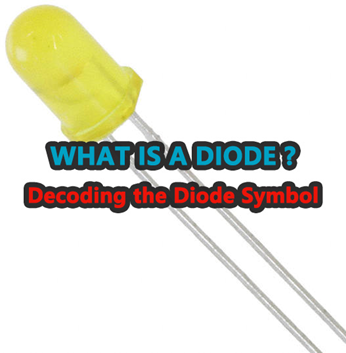
What is a Diode?
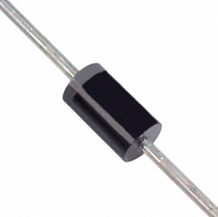
Because they convert alternating current (ac) into pulsing direct current (dc), diodes are often referred to as rectifiers. Diodes are rated based on their voltage, type, and current carrying capacity. An anode (positive lead) and a cathode (negative lead) determine the polarity of a diode. The majority of diodes only permit current to flow when the anode receives a positive voltage. A diode is a two-terminal electronic component that allows current to flow in one direction while blocking it in the opposite direction. It’s one of the simplest yet most fundamental semiconductor devices used in electronic circuits. Diodes are made from semiconductor materials, typically silicon or germanium, and consist of a P-N junction. As a reliable electronic components distributor, Ersa Electronics will provides a variety of diodes to customers. Octopart is a comprehensive platform that offers users a single point of contact for all of their electrical component needs by compiling data from hundreds of manufacturers and distributors around the globe.
What is a Diode Symbol?
In circuit diagrams, the diode symbol is represented by an arrow that points in the direction of regular current flow. It is made up of a triangle pointing in the direction of a short line that is perpendicular to the arrow’s path. The cathode (negative terminal) is represented by the line, and the anode (positive terminal) by the triangle.
Types of Diodes and Their Diode Symbols
Diodes are available in a variety of forms, and each has a distinctive symbol that denotes their particular characteristics and uses in electrical circuits. While specialized diodes have modified symbols, conventional rectifier diodes use the fundamental arrow symbol (▷|).
For example, Light Emitting Diodes (LEDs) have arrows pointing outward to signify light emission; Zener diodes have a cathode line shaped like a “Z” to regulate voltage; and Schottky diodes have a cathode line shaped like a “S” to indicate quick switching capabilities. Other varieties are photodiodes with inward-pointing arrows for light sensitivity, tunnel diodes with a central rectangle signifying negative resistance qualities, and varactor diodes with a parallel cathode line for voltage-controlled capacitance.
Specialized varieties with unique symbols or alterations include PIN, avalanche, and Gunn diodes. Since these symbols offer instant visual signals regarding the type of diode and its intended purpose inside a circuit, understanding them is essential for accurately interpreting and developing electronic schematics.
What is a Diode Symbol on Multimeter?
A multimeter’s capacity to test diodes for correct functionality is shown by the diode symbol. You may determine whether the diode is operating appropriately by measuring the forward voltage drop and setting the multimeter to diode test mode. To ensure that the diode conducts in one direction and blocks in the other, a good test must examine the diode’s reaction in both forward and reverse bias.
What is a Zener Diode Symbol?
With one notable exception, a Zener diode’s sign is comparable to that of a regular diode. It is made up of an arrowhead or triangle that points in the direction of the cathode, which is represented by a vertical line. The primary distinction is that the vertical line ends in a little bend that resembles a “Z,” signifying the Zener diode’s unique characteristics.
Zener Diode Symbol Features
Triangle: Indicates the direction of conventional current flow by pointing toward the cathode.
Vertical Line: Indicates the cathode; the cathode side is usually indicated by a band.
Bend in the Line: The Zener diode is distinguished from a standard diode by the bend at the end of the vertical line, which indicates that the diode can conduct under reverse bias once the breakdown voltage, or Zener voltage, is reached.
In circuit designs, Zener diodes— which are mostly used for voltage regulation and sustaining a stable output voltage under changing load conditions—are made easier to identify for engineers and technicians by this symbol.
What is a Schottky Diode Symbol?
A Schottky diode has a unique change to its symbol, which is identical to that of a regular diode. It has a triangle that symbolizes the anode and points in the direction of a vertical line that represents the cathode. The cathode line is extended to resemble a “S,” signifying its special characteristics as a Schottky diode, and this is the main distinction.
Schottky Diode Symbol Features
Triangle: Indicates the direction of conventional current flow by pointing towards the cathode.
Extended Cathode Line: The cathode’s line is bent, giving it a “S” form that sets it apart from the traditional diode symbol.
This modification emphasizes the qualities of the Schottky diode, which make it appropriate for high-speed applications and rectification in electronic circuits. These qualities include its low forward voltage drop and quick switching capabilities.
FAQs About Diode Symbol
What does the triangle on the diode sign represent?
The triangle in the diode symbol stands for the anode of the diode. The diode indicates the direction conventional current flows when it is forward-biased.
What does the line in the diode symbol represent?
The line in the diode symbol stands for the cathode of the diode. The terminal loses current when the diode is conducting.
How can I tell if a diode is forward-biased or reverse-biased just by looking at the symbol?
You can determine the biasing by looking at the orientation of the triangle and line: Forward-biased: Current flows from the anode (triangle) to the cathode (line). Reverse-biased: Current cannot flow when the potentials of the cathode and anode are different.
What sets a Zener diode sign apart from a conventional diode?
A Zener diode’s sign is similar to that of a typical diode, with the exception that the cathode line has a little, “Z-shaped” bend at the end. This demonstrates that it can conduct under reverse bias if the breakdown voltage is reached.
How does the Schottky diode sign appear?
Similar to the regular diode symbol, the Schottky diode symbol is formed by extending the cathode line to form a “S” shape. This highlights its unique characteristics, namely its fast switching speed and low forward voltage drop.
Why is it crucial to comprehend diode symbols?
Understanding diode symbols is necessary for accurate comprehension of circuit diagrams. Understanding the type of diode and its function inside a circuit is useful for building, troubleshooting, and analyzing electrical circuits.